We're currently looking for dog trainers, suppliers and lead partners for this website. Click here for details.Typical cost Private lesson: $100–$250 per sessionTypical cost Group class: $150–$400 per courseTypical cost Board and train: $1,500–$4,000 per programTypical cost Puppy package: Priced per packageTypical cost Behavior consult: Priced per visitPark City Fall tip Cooler mornings are great for longer training walks.Park City Fall tip Practice recall before busy holiday crowds arrive.We're currently looking for dog trainers, suppliers and lead partners for this website. Click here for details.Park City Winter tip Seasonal residents: book training early in your stay.Park City Winter tip Practice patio manners during mild winter days.Park City Spring tip Start puppy training before summer travel.Park City Spring tip Practice calm walking on busy paths.Park City Summer tip Train early or late to avoid peak heat.Park City Summer tip Check pavement and sand temperature before walks.U.S. Census Bureau Summit County, Utah: 207 new homes permitted so far in 2026 (through August)
Cold snaps are coming to Park City, and the American Veterinary Medical Association says dogs' cold tolerance varies with their coat, body fat, activity level and health. Know your own dog's limits and adjust. You'll probably need to shorten walks in very cold weather, for your dog's sake and yours. [AVMA]
Who gets cold fastest
Short-haired dogs feel the cold sooner, and short-legged dogs can get cold faster because their bellies touch snow-covered ground. [AVMA]
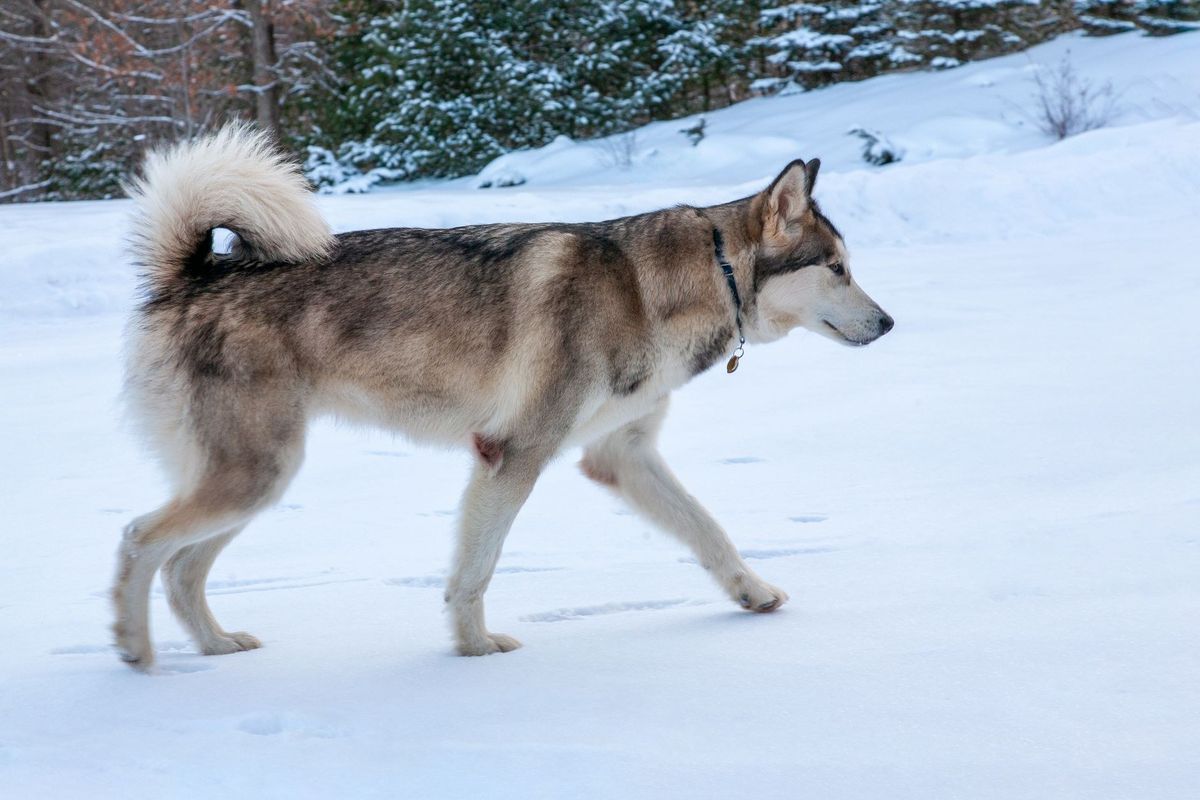
Thick-coated breeds such as huskies are more cold-tolerant, but no pet should be left outside for long periods in below-freezing weather. [AVMA]
Very young and very old dogs, and dogs with diabetes, heart disease, kidney disease or hormonal imbalances, may have a harder time regulating body temperature. Ask your veterinarian about your dog's limits. [AVMA]
On winter walks
Check paws often for cracked or bleeding pads. Sudden limping on a walk may be ice built up between the toes; clipping the hair between the toes can help. [AVMA]
A sweater or coat can help a short-coated dog. Keep a dry one ready, because a wet coat can make a dog colder. If you use booties, make sure they fit. [AVMA]
Stay away from frozen ponds and lakes. You can't know whether the ice will hold your dog. [AVMA]
Snow and ice can hide familiar scents, so keep a well-fitting collar with current ID and keep microchip contact details up to date. [AVMA]
Whining, shivering, anxiety, slowing down or stopping, weakness, or looking for warm places to burrow are signs of hypothermia, so get your dog inside quickly. Frostbite is harder to spot. If you suspect either, call your veterinarian right away. [AVMA]
 PARK CITY